

Sharing & Permissions
Control who can access your presentations and what they can do.
Overview
Section titled “Overview”Deckyard’s permission system lets you share presentations with team members while controlling their access level. Share with specific users via email or create public share links.
Permission Levels
Section titled “Permission Levels”Users with view permission can:
- View the presentation
- Navigate through slides
- Access the public viewer
They cannot:
- Make any changes
- Add comments
- Access the editor
Comment
Section titled “Comment”Users with comment permission can:
- View the presentation
- Add comments and suggestions
- Mention other collaborators
They cannot:
- Edit slide content
- Delete or modify existing content
Users with edit permission can:
- View and edit slide content
- Add, reorder, and delete slides
- Add comments
- Use the full editor
They cannot:
- Share with others
- Delete the presentation
- Transfer ownership
Users with admin permission have full control:
- All edit permissions
- Share with others and change permissions
- Delete the presentation
- Transfer ownership
Adding Collaborators
Section titled “Adding Collaborators”Via the Share Dialog
Section titled “Via the Share Dialog”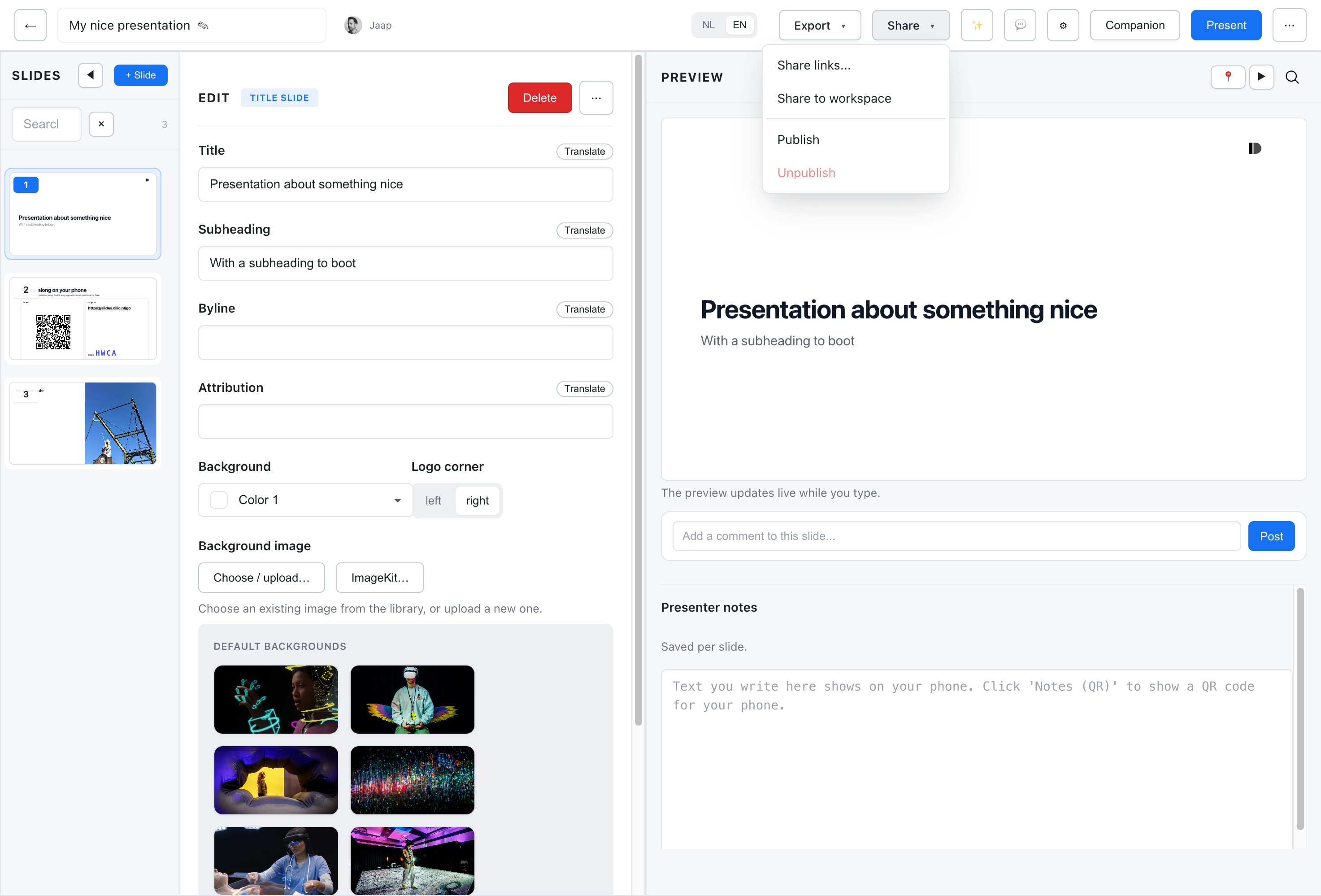
- Open your presentation
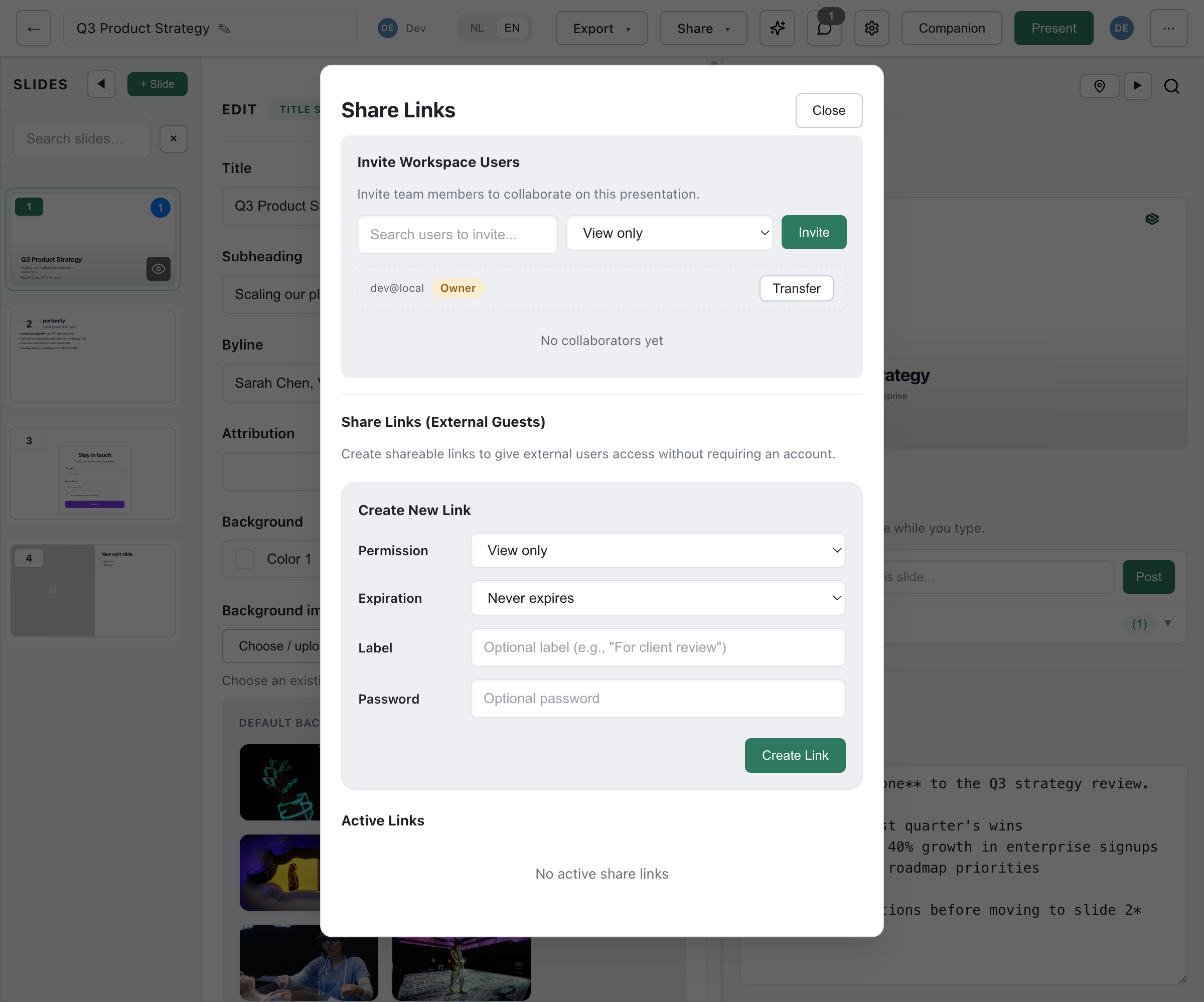
- Click the Share button in the toolbar
- Enter the collaborator’s email address
- Select the permission level
- Click Add
The collaborator receives an email invitation with a link to the presentation.
Via Email Invitation
Section titled “Via Email Invitation”When you add a collaborator:
- System checks if email exists in the system
- If user exists: they get immediate access
- If user doesn’t exist: they receive an invitation link
The invitation link allows access even without an account (with limited functionality).
Sharing with Multiple People
Section titled “Sharing with Multiple People”Add multiple collaborators at once:
- Enter email addresses separated by commas
- Or paste a list of emails
- Select a permission level for all
- Click Add All
Revoking Access
Section titled “Revoking Access”Remove a Collaborator
Section titled “Remove a Collaborator”- Open the Share dialog
- Find the collaborator in the list
- Click the Remove button (or X icon)
- Confirm the removal
The collaborator immediately loses access.
Changing Permission Levels
Section titled “Changing Permission Levels”- Open the Share dialog
- Find the collaborator
- Click the current permission level
- Select the new level from the dropdown
Changes take effect immediately.
Presentation Scope
Section titled “Presentation Scope”Presentations have a scope that affects visibility:
Private (Default)
Section titled “Private (Default)”- Only visible to owner and explicit collaborators
- Requires authentication to view
- Most secure option
Team/Workspace
Section titled “Team/Workspace”- Visible to all members of your team or workspace
- Team members get default read access
- Useful for internal presentations
Public
Section titled “Public”- Accessible via public share link
- No authentication required for viewing
- Interactions (polls, Q&A) still work
Share Links
Section titled “Share Links”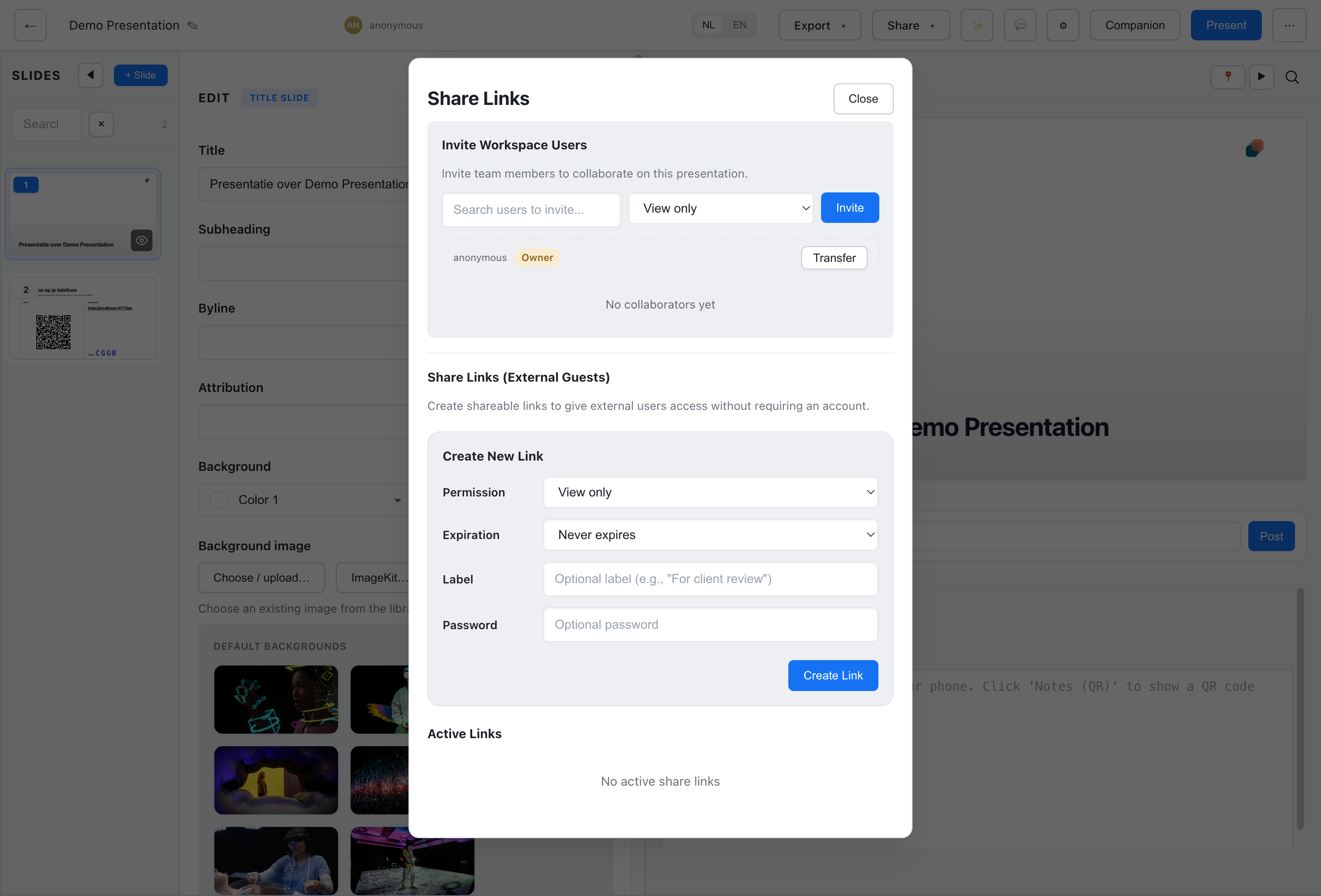
Creating a Share Link
Section titled “Creating a Share Link”- Open the Share dropdown in the toolbar
- Click Share links…
- In the Share Links (External Guests) section, configure your link options
- Click Create Link
- Copy the generated link
Share Link Options
Section titled “Share Link Options”- Password protection - Require a password to view
- Expiration date - Link expires after a set date
- Allow downloads - Enable/disable export options
Guest Access via Share Links
Section titled “Guest Access via Share Links”Viewers accessing via share link:
- Can view the presentation
- Can participate in polls and Q&A
- Cannot edit or comment
- Are tracked anonymously in analytics
Organization Context
Section titled “Organization Context”Team Ownership
Section titled “Team Ownership”When you create a presentation within a team:
- Team admins have admin access
- Team members may have default access (configurable)
- Presentation belongs to the team context
Personal vs Team Presentations
Section titled “Personal vs Team Presentations”Personal presentations:
- You are the sole owner
- You control all sharing
- Stored in your personal space
Team presentations:
- Created within a team context
- Team policies may apply
- May be visible to team by default
Moving Between Contexts
Section titled “Moving Between Contexts”Transfer a presentation between personal and team:
- Open presentation Settings
- Click Move to…
- Select destination (personal or team)
- Confirm the move
This may change default visibility based on destination policies.
API Access
Section titled “API Access”List Collaborators
Section titled “List Collaborators”GET /api/presentations/{id}/collaboratorsAdd Collaborator
Section titled “Add Collaborator”POST /api/presentations/{id}/collaboratorsContent-Type: application/json
{ "email": "user@example.com", "permission": "edit"}Remove Collaborator
Section titled “Remove Collaborator”DELETE /api/presentations/{id}/collaborators/{email}Best Practices
Section titled “Best Practices”Principle of Least Privilege
Section titled “Principle of Least Privilege”- Start with view permission
- Upgrade to edit only when needed
- Reserve admin for trusted collaborators
Regular Permission Audits
Section titled “Regular Permission Audits”- Review collaborator lists periodically
- Remove access for people who no longer need it
- Check for stale share links
Use Teams for Groups
Section titled “Use Teams for Groups”Instead of adding many individual collaborators:
- Create a team
- Add users to the team
- Share with the team
This simplifies permission management.